
There are no items in your cart
Add More
Add More
| Item Details | Price | ||
|---|---|---|---|
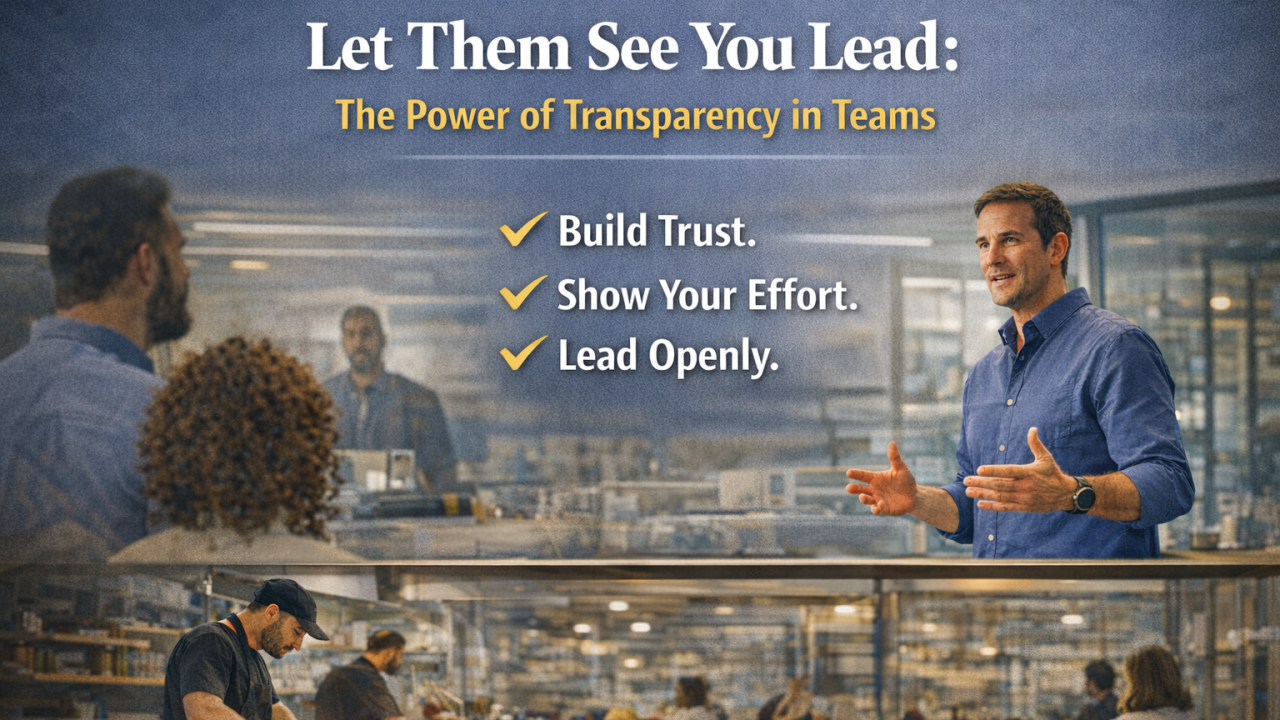
I recently had a coaching conversation with a leader who was facing a challenge that’s all too common: trust issues within their team. The signs were obvious; team members were hesitant to collaborate, reluctant to take ownership, and rarely approached their leader with questions.
The leader’s goal was simple yet profound: “How can I build trust with my team?”
As we explored this together, I found myself at a crossroads. So, I turned the question back to the leader: “Who do you trust?” The answer was thoughtful, but a bit theoretical—trust, for this leader, was reserved for those who had proven themselves in the past.
I pressed further, asking how he had proven himself as a leader, and how he expected his team to trust him. After a long pause, he admitted that it was a new team, and because of the nature of the business, it was a volatile environment…people were moving in and out every few months. At any given time, only a couple of team members knew him well; the rest were new.
So, I asked, “Have you ever trusted someone you didn’t know?” He nodded, and shared a beautiful example. When engaging with a completely new brand, say, an eatery, he’d walk in with an experimental mindset, observe the environment, the service, maybe taste the food, and only then decide whether to trust the place or not. He continued to reflect…”Gotcha…I need to allow them to experience me a little bit longer.”
We acknowledged his newfound awareness, and that’s when I asked, “Imagine you’re choosing between two restaurants: one with a closed kitchen and one with an open kitchen. Where would you be willing to pay more?”
The leader smiled and replied, “Of course, the open kitchen. I can see what’s happening. It’s all out in the open. I know the food is being prepared in a clean environment.”
I noticed the smile and asked, “What’s behind that smile?” The leader reflected and said, “Maybe I need to be more transparent.”
Rest of the conversation was woven around how can he be more available for his team and be seen as a transparent and vulnerable leader,
What the leader had uncovered is called the Effort Heuristic.
When we see or believe that significant effort has gone into something, we automatically perceive it as more valuable.
Harvard research by Michael Norton found that people rated made-to-order furniture 63% higher than identical pre-made pieces, simply because they saw the effort involved.
Key Takeaways
If this conversation intrigued you and you’d like to have similar conversations… please block a zero cost chemistry session here: https://calendly.com/shantisharma/60min

 Launch your Graphy