
There are no items in your cart
Add More
Add More
| Item Details | Price | ||
|---|---|---|---|
“I’m doing everything right, but it still feels heavy.” Ramesh says.
I ask, “What feels hardest right now?”
He thinks for a moment. “Decisions take longer....My team waits for me...I’m reacting all day.”
I nod. “And when did that start?”
Another pause. “I’m not sure,” he says. “It just… became normal.”
After a moment, I ask, “Can I ask you something a little different?”
He smiles. “Sure.”
“After setting up your phone for the first time when you bought it, have you ever gone back and changed its settings?” I ask.
He shakes his head. “No.”
“So months later,” I continue, “same ringtone...same wallpaper....and notifications you don’t really need.”
He nods. “The phone’s powerful, but honestly, I don’t use most of what it can do….Never have.”
I let the silence stretch, then I ask, “Where else might this be true?”
He leans back. “My leadership,” he says quietly.
“Yeah…Most leaders don’t deliberately choose ineffective habits. They inherit them. How meetings run. How decisions are made. How pressure is handled. How feedback happens. Or doesn’t. No one consciously designed these ways of working. They just stuck. These are defaults, and defaults are powerful.” I say.
“Once they’re in place, they tend to stay. Not because they’re the best option. But because changing them takes effort.”
So why don’t I change them?” Ramesh asks.
“What do you notice happens instead?” I ask.
He thinks. “I push through, Try harder. Stay alert. Remind myself.”
“And how long does that usually last?” I ask.
A small pause. “Not very,” he admits.
“There’s also something else,” he adds. “It feels risky. Like… what if I change something and it gets worse?”
I nod. “So staying with what’s familiar feels safer,” I say.
“Yes,” he replies. “Even when it’s no longer working.”
After a moment, he looks up.
“So what actually does change things?” he asks.
I turn the question back to him. “When have things really stuck for you?”
“When the environment changed,” he says slowly. “When the habit didn’t depend on me remembering.”
I nod.
“So less effort, More design.” he summarizes with clarity
Then I ask, “If you were to step back, once a year… what would you review?”
He answers carefully. “How I respond under pressure. Which routines I’ve never questioned. Where I’m leading on autopilot.”
I smile. “That’s your leadership audit.”
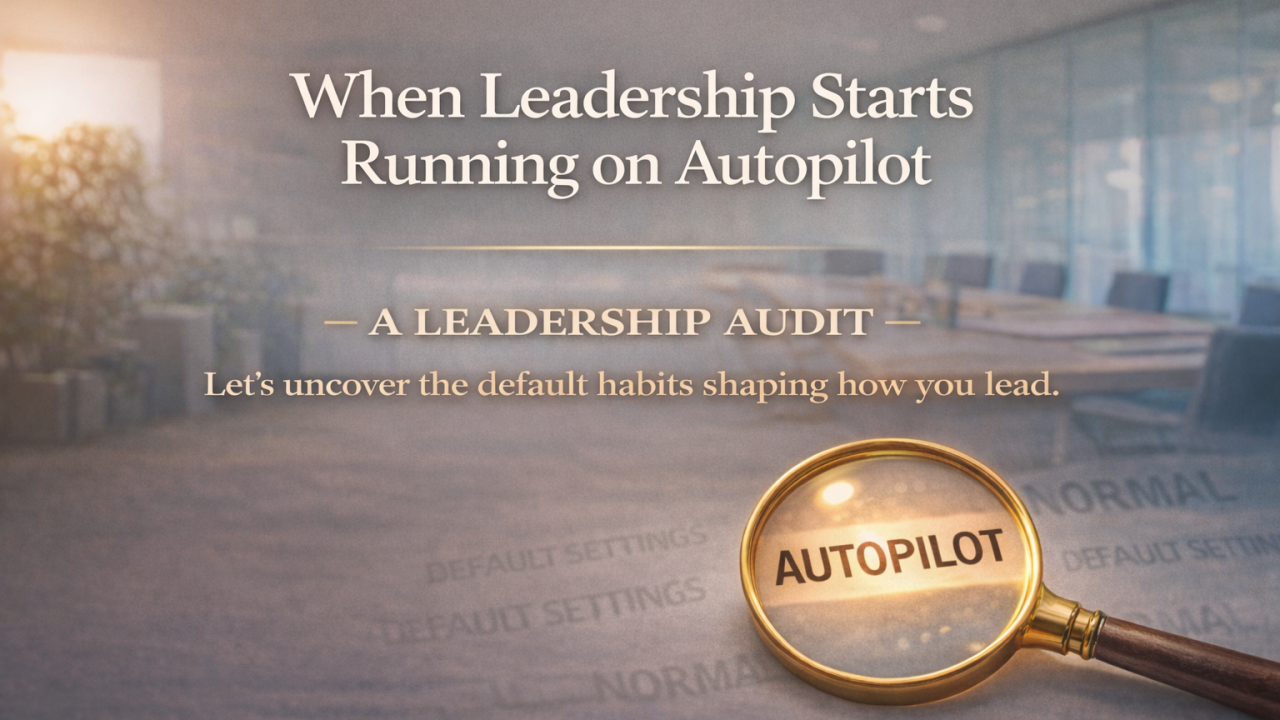
Stopping here on the conversation…but a leadership audit is a deliberate pause to notice the patterns that have become automatic.
It’s not an evaluation. It’s not a checklist. And it’s not about fixing everything.
It’s a moment to step back and observe:
A leadership audit brings awareness to the default settings shaping your leadership…often quietly, often unnoticed.
If you’re reading this, you don’t need to change anything right now.
Just notice.
Notice one habit you’ve stopped questioning. One response that shows up without thinking. One way of leading that feels “normal.”
That awareness alone creates choice.
And choice is where leadership begins.
 Launch your Graphy